
Last updated: October 31, 2026 · Written by Juan · Researched using a randomized pilot study, a 2025 network meta-analysis, a dermatologist’s review and clinic-published guidance (linked below)
This article is educational only. It is not medical advice, and I am not a doctor. Microneedling near a healing transplant carries real risks if timed or done incorrectly, so do not start it without your surgeon’s approval. See our Editorial Policy for how we research and update our articles.
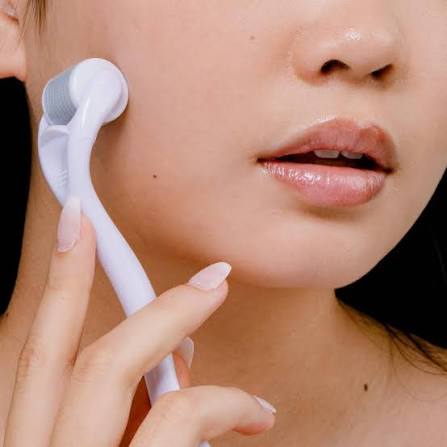
Microneedling means using a device covered in tiny needles, such as a derma roller, to make controlled micro-injuries in the scalp. It comes up constantly in hair loss discussions, usually with a claim that it boosts results. The evidence is narrower than the marketing: there is some clinical support for it, but mostly as an add-on to other treatments, not as a fix on its own.
What the evidence shows
The study cited most often is a 2013 pilot study by Dhurat and colleagues in the International Journal of Trichology. As summarized by dermatologist Dr. Jeff Donovan, it compared 100 patients: half used minoxidil alone, and half used minoxidil plus weekly microneedling with a 1.5 mm roller. In the combined group, 82% felt their hair had improved by more than 50%, against 4.5% with minoxidil alone, and hair counts rose much more.
More recently, a 2025 network meta-analysis in Frontiers in Medicine comparing combinations of minoxidil with other treatments ranked minoxidil plus microneedling as the most effective combination in women. The likely reason is mechanical: tiny channels in the skin may help a topical treatment like minoxidil penetrate.
The limits matter. Dr. Donovan notes that the results still need confirming, that the best needle length and frequency are unknown, and that it is unclear whether some people get worse. The studies test microneedling alongside other treatments, so they do not show that a derma roller alone regrows hair. A fair summary is that microneedling may make other treatments work better, which is a real but modest finding.
Claims to be more sceptical of
Some content describes microneedling as speeding transplant healing or reducing scarring through growth factors, without citing trials that test those specific claims. The mechanism sounds plausible, but plausible is not the same as proven. The minoxidil-combination evidence above comes from published studies; claims about transplant healing are mostly presented as clinic opinion. Treat them accordingly.
Needle length and frequency
This is where mistakes happen. Longer needles go deeper and need longer recovery between sessions, so using a long roller as often as a short one increases the risk of irritation and scarring. The main study used 1.5 mm weekly, but as Dr. Donovan notes, the best settings have not been established. Agree the needle length and schedule with your doctor rather than copying a routine from the internet.
The risks
Commonly reported side effects include redness, itching and, with longer needles, pinpoint bleeding, along with temporary tightness or swelling. The more serious concern is overuse: repeated injury can cause scarring, which works against hair growth. Consumer devices also vary in needle quality and sterility, which matters more on a scalp that has recently healed.
Timing around a transplant
This is the question the title asks, and it has the least evidence. one US hair restoration practice describes using microneedling before a transplant to prepare the recipient area and afterwards to support healing, but without citing trial data for that timing. Treat it as one clinic’s approach.
In practice, microneedling on or near fresh, unhealed grafts is a very different risk from microneedling on a fully healed scalp. Do not start until your surgeon has cleared the area. If you plan to restart minoxidil after surgery (see our aftercare products guide), ask your surgeon when adding microneedling would be safe. Our recovery timeline shows when grafts are most fragile.
Questions to ask your surgeon
- When after my procedure would microneedling be safe, given how I am healing?
- Are you recommending it because of evidence, or as a general supportive measure?
- What needle length and frequency do you recommend for me, and why?
- If I am restarting minoxidil, does adding microneedling change that schedule?
Frequently asked questions
Can microneedling replace minoxidil or finasteride? No. The evidence is about microneedling enhancing those treatments, not replacing them. See our medication vs transplant guide.
Is an at-home derma roller the same as a clinic device? Not necessarily. Needle quality, sterility and depth can vary, which matters more on a healing scalp.
Does microneedling help transplant scars? I did not find good evidence for this. Our scars guide covers better-established options such as scalp micropigmentation and scar revision.
Can it be combined with PRP? Some clinics combine them. Our PRP guide explains what the evidence for PRP shows. Agree timing with your provider.
This article is for information only and is not medical advice. Get your surgeon’s approval before starting microneedling around a healing or recently healed transplant.
Sources consulted: Dhurat et al., A randomized evaluator blinded study of effect of microneedling in androgenetic alopecia (Int J Trichology, 2013); Dr. Jeff Donovan: Microneedling for treating AGA; Relative efficacy of minoxidil in combination with other treatments: a network meta-analysis (Front Med, 2025); Anderson Center for Hair: Microneedling in hair transplant recovery.