
Last updated: October 31, 2026 · Written by Juan · Researched using ISHRS patient information and survey data, and surgeon-published repair guidance (linked below)
This article is educational only. It is not medical advice, and I am not a doctor. Repair cases vary enormously depending on what went wrong, so this is general orientation, not a substitute for an assessment by a surgeon experienced in repair work. See our Editorial Policy for how we research and update our articles.
Most writing about hair transplants assumes the first one goes well, and usually it does. But some people are dealing with the opposite: a hairline that looks unnatural, patchy density, visible scarring, or grafts placed at the wrong angle. According to ISHRS survey data reported by Practical Dermatology, 5.4% of hair restoration patients in 2021 were seeking repair from a doctor who had not performed their original surgery, up from 4.2% in 2019. This article covers what can be fixed, what cannot, and how repair differs from a first procedure.
What counts as a “bad result”
Not every disappointing outcome needs surgery. It helps to separate three problems, because they are handled very differently:
- Still healing. Thin-looking growth in the first months is often normal. one clinic’s recovery guide says visible growth typically starts at three to four months and that twelve months is the earliest fair point to judge a hairline. See our recovery timeline.
- Technically poor work. A hairline that is too straight, too low or asymmetric; grafts facing the wrong way; a widened strip scar; or a “pluggy” look from old-style large grafts.
- Limits, not errors. Even a skilled surgeon cannot give unlimited density if the donor area has been overharvested, or keep a result looking natural if hair loss continues around it.
Repair surgery addresses the second category. The third is managed rather than fixed.
The most common repair cases
The ISHRS lists the problems it sees most often:
Unnatural hairline or graft angles
Hairlines placed too low or too straight, often at a younger patient’s request, and grafts set at the wrong angle or direction, which can look very unnatural at the front. Repair usually means adding finer grafts to soften the line and, where needed, removing or relocating badly placed grafts. Our guide to hairline design explains why the design matters so much.
Pluggy grafts
Older transplants often used large grafts containing many hairs, giving a coarse, tufted look. The ISHRS says repair can involve removing some or all of these grafts, and FUE allows them to be removed selectively and sometimes moved to better places. Bernstein Medical notes that hairs taken from old plugs and re-implanted can survive similarly to normal grafts, though placing them into heavily scarred scalp can reduce growth.
Donor scarring
With FUT the scar can widen or sit in the wrong place; with FUE, overharvesting can leave what the ISHRS calls “moth-eaten” areas. Parsa Mohebi Hair Restoration describes options including scar revision, transplanting hair into the scar and scalp micropigmentation. Our guide to FUE and FUT scars covers this in detail.
A depleted donor area
If an earlier procedure used too much donor hair, the ISHRS says correction can be difficult or impossible. Options shift to a smaller, more conservative repair, scalp micropigmentation, or, for suitable candidates, beard or body hair, which the ISHRS mentions as a possible donor source in repair.
Why repair is harder
The ISHRS describes repair as unlike routine transplantation and almost a specialty of its own. Limited donor hair, the need for realistic goals and the risk of adding scarring all narrow what can be done, and the ISHRS says some cases should not be operated on at all. Repair often takes more than one procedure, with improvements made step by step.
Missing records add to the difficulty: if the first clinic did not record how many grafts were taken and from where, a new surgeon has to work out what is safely left.
The ISHRS also runs a campaign against unlicensed and black-market clinics. As reported by Practical Dermatology, 51% of members surveyed in 2022 said such clinics operated in their cities, and the society holds an annual World Hair Transplant Repair Day, offering some victims free corrective surgery from volunteer members.
Finding a repair surgeon
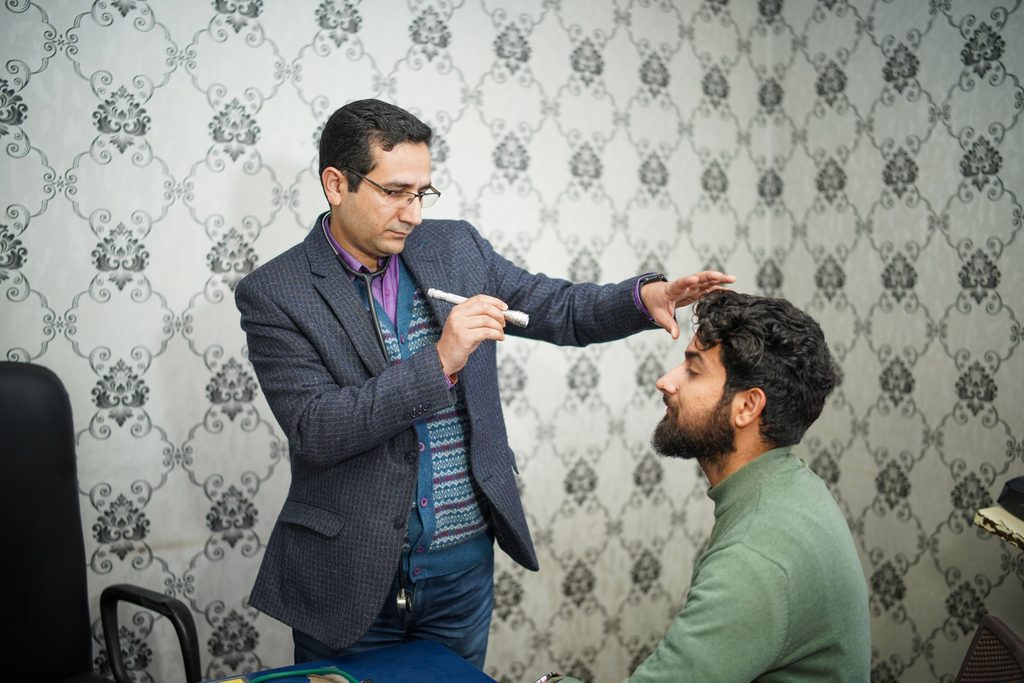
The ISHRS suggests looking for years of experience in hair restoration, particularly with repair cases, asking to see examples of the surgeon’s repair work, and using its ISHRS find-a-doctor tool. Our guide to choosing a clinic covers the general checks. For repair, also ask:
- How many repair cases have you treated, specifically?
- Can I see before-and-after photos of repair cases, not first-time procedures? Our guide to spotting misleading photos applies here too.
- What can be improved in my case, and what cannot?
A surgeon who answers the last question clearly, including the limits, is usually a better sign than one who promises a complete fix. Practices that list repair work include several in our US clinics guide.
Before committing to repair surgery
- Let the first procedure finish healing. If the result is less than a year old, get a second opinion on whether it has finished growing.
- Get your records from the original clinic if you can: graft count, technique and any complications.
- Have at least two consultations with surgeons who have repair experience.
- Ask about a staged approach, since repairs are often done over several sessions.
Quick answers
Can a bad transplant always be fixed? Not always fully. Many cosmetic problems, such as an unnatural hairline, pluggy grafts or some scarring, can be improved, but a depleted donor area is the hardest limit to work around.
Is repair more expensive? It often costs more per graft, because it takes longer and fewer surgeons do it. Ask for an itemized quote.
How long should I wait before seeking repair? Usually at least a year after the original procedure, so you are judging a finished result. Our article on hair transplant regret covers how to tell normal healing from a real problem.
This article is for information only and is not medical advice. Always consult a qualified, licensed surgeon before making any decision about treatment.
Sources consulted: ISHRS: Revision and repair of previous hair transplants; Practical Dermatology: World Hair Transplant Repair Day (2024); Bernstein Medical: Hair transplant repair; Parsa Mohebi Hair Restoration: Scalp scar revision; Acibadem International: When transplanted hair starts growing.