
Last updated: October 31, 2026 · Written by Juan · Researched using surgeon- and clinic-published post-operative travel guidance
This article is educational only. It is not medical advice, and I am not a doctor. Your own surgeon’s instructions come first: they know your graft count, technique and how you are healing. See our Editorial Policy for how we research and update our articles.
If you travel abroad for your procedure (Turkey and the other destinations in our cost by country guide are the most common), the flight home usually falls in the days when your scalp is most fragile. It is worth planning the trip home as part of the procedure, not as an afterthought.
How soon can you fly? Sources give different answers
There is no single agreed number, and it helps to know why. Sante Clinics says it is generally advised to wait at least 5 to 7 days before flying. Charles Medical Group, a US practice, splits the answer by technique and flight length:
| Situation | Earliest suggested flight |
|---|---|
| FUE, flight under 6 hours | 24 to 48 hours |
| FUE, flight over 6 hours | 7 days |
| FUT, flight under 6 hours | 5 to 7 days |
| FUT, flight over 6 hours | 10 to 14 days |
| History of blood clots or high blood pressure | At least 4 days, after talking to your surgeon and doctor |
Both sources advise against flying on the day of surgery, and Charles Medical Group describes the first 24 hours as the period of highest risk for grafts being displaced. In practice, clinics that mainly treat international patients often schedule the flight home a day or two after surgery, after the first wash. If your clinic clears you to fly early, the in-flight precautions below matter more, not less.
Why flying is a concern for new grafts
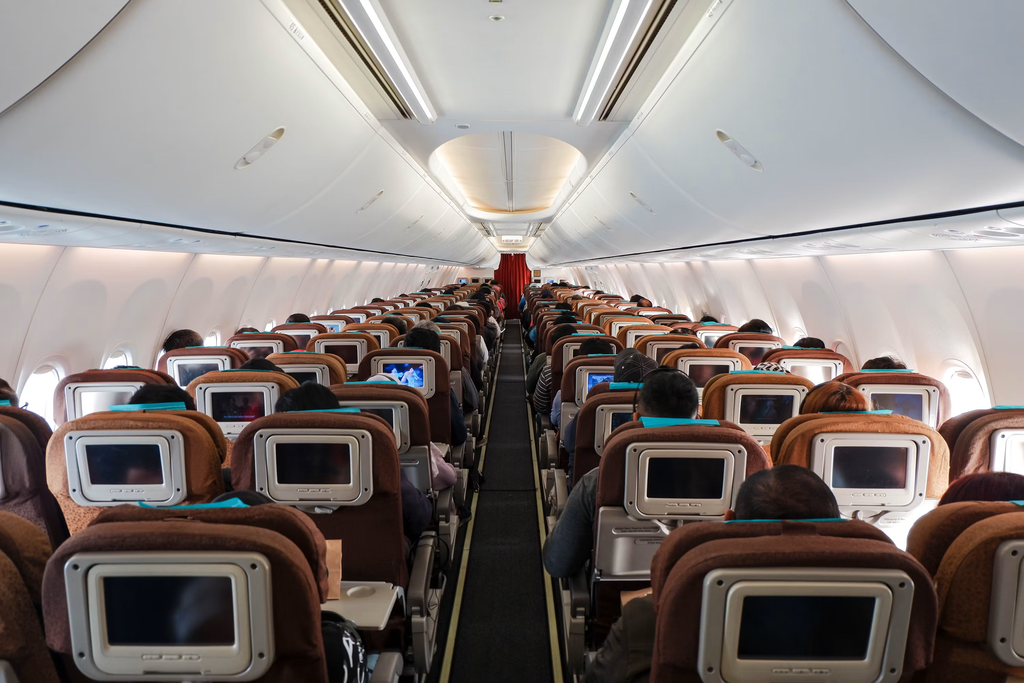
- Swelling. Cabins are pressurized to the equivalent of roughly 6,000 to 8,000 feet, according to Charles Medical Group, and the lower pressure can make post-operative swelling of the forehead and eyes worse.
- Dry air. Cabin humidity is very low, which can dry out the scalp while grafts and scabs are still settling.
- Bumps and pressure. Headrests, overhead bins and other passengers can knock the recipient area. FUT patients also have a fresh stitched incision at the back of the head.
- Circulation. Sitting still for hours affects blood flow. Charles Medical Group points to CDC advice about blood clot (DVT) risk on long flights after surgery.
Sante Clinics also lists infection risk, since a cabin is a crowded shared space. Whatever the source, the practical point is the same: keep your hands off the grafts and watch for redness, warmth, discharge or fever afterwards. Our complications guide explains which signs mean you should call your clinic.
What to do on the flight
- Bring a U-shaped travel pillow. It keeps your neck supported and the back of your head off the headrest. Charles Medical Group calls it the single most important item for the trip.
- Wear only loose headwear. A loose surgical cap or wide-brimmed hat is fine; a tight cap can press on the grafts. Use what your clinic gives you or recommends.
- Drink water regularly and skip alcohol, which can also interact with medication you have been prescribed.
- Use saline spray only if your surgeon has told you to. Some clinics recommend it on long flights to counter the dry air; follow their instructions on how often.
- Keep your head upright rather than leaning it against the window or seat back. A window seat reduces the chance of someone bumping you.
- Walk the aisle every hour or two on longer flights to help circulation.
- Keep your medication in your hand luggage, in the original labeled packaging, and take it on schedule.
The rest of the trip home
A loose hat is normally fine at airport security, but be ready to take it off briefly if asked. You do not have to explain your procedure, though a short answer ready in your head makes it easier if someone asks about visible redness or scabs.
The same rules apply to a long car journey or a layover with a lot of walking: protect the recipient area, stay hydrated and keep your head off hard surfaces. Our recovery timeline shows what your scalp is doing in those first days, and our guide to Turkey packages explains which transfers clinics usually include.
Frequently asked questions
Can I use a neck pillow straight after surgery? Yes, and it is one of the most commonly recommended items, as long as it supports your neck without pressing on the treated area.
Is a short flight safer than a long one? The pressure change happens on any flight. Longer flights add more time in dry air, more time sitting still and more chance of resting on one spot, which is why the suggested waits are longer for them.
Should I tell airport security about the procedure? It is not required. If you are asked about a head covering or visible healing, a brief explanation is enough.
My clinic says I can fly sooner than 5 to 7 days. Should I wait anyway? Follow your own surgeon. They have seen your scalp, your graft count and your technique, which a general article cannot do.
This article is for information only and is not medical advice. Always follow your own surgeon’s post-operative and travel instructions.
Sources consulted: